
Introduction to Direct Inward Dialing (DID)
In business communications, efficiency is paramount. Every missed call can be a missed opportunity, and every second a customer spends navigating a complex phone menu drains their patience. Businesses need a way to connect callers to the right person quickly, without forcing them through a frustrating switchboard or auto-attendant. This is the core problem that Direct Inward Dialing (DID) solves.
DID is a foundational telephony feature that allows external callers to dial a unique phone number that rings directly on an internal employee’s extension. Historically, this technology replaced the need for a human operator to manually connect every call. Today, it remains a critical tool for creating a professional, accessible, and scalable communication system.
This guide provides an expert look at Direct Inward Dialing. We will cover how it works, its significant benefits, and how you can implement it in your own business.
How Direct Inward Dialing (DID) Works
At its simplest, DID is a service offered by a telecommunications provider that gives a business a block of telephone numbers. Instead of having just one main number, you have a range of numbers that can be assigned to individual employees, departments, or even specific functions like a fax line.
The Role of the PBX
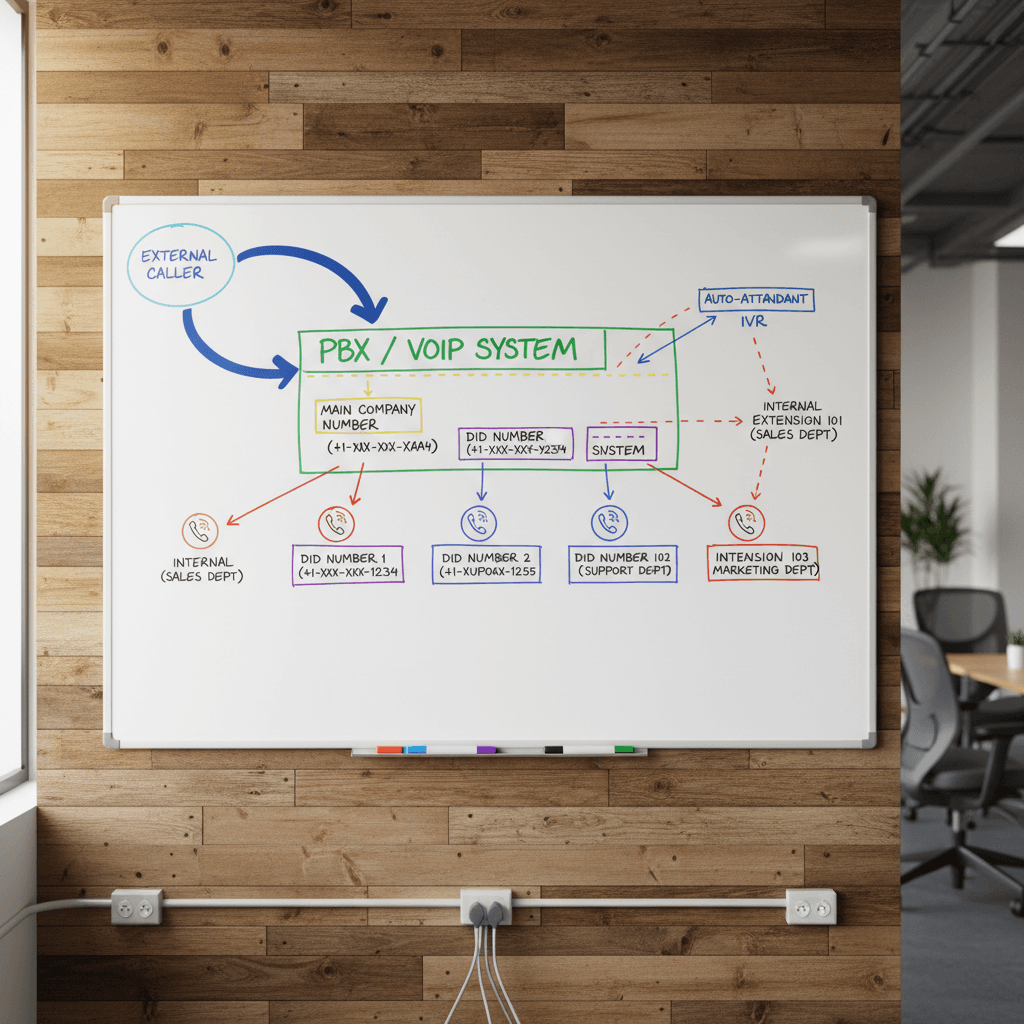
The magic of DID happens within your business’s phone system, specifically the Private Branch Exchange (PBX). The PBX is the central switching system that manages all your internal and external calls.
Here’s how it works:
1. Number Block: Your provider assigns you a range of sequential phone numbers (e.g., 555-1001, 555-1002, 555-1003, etc.).
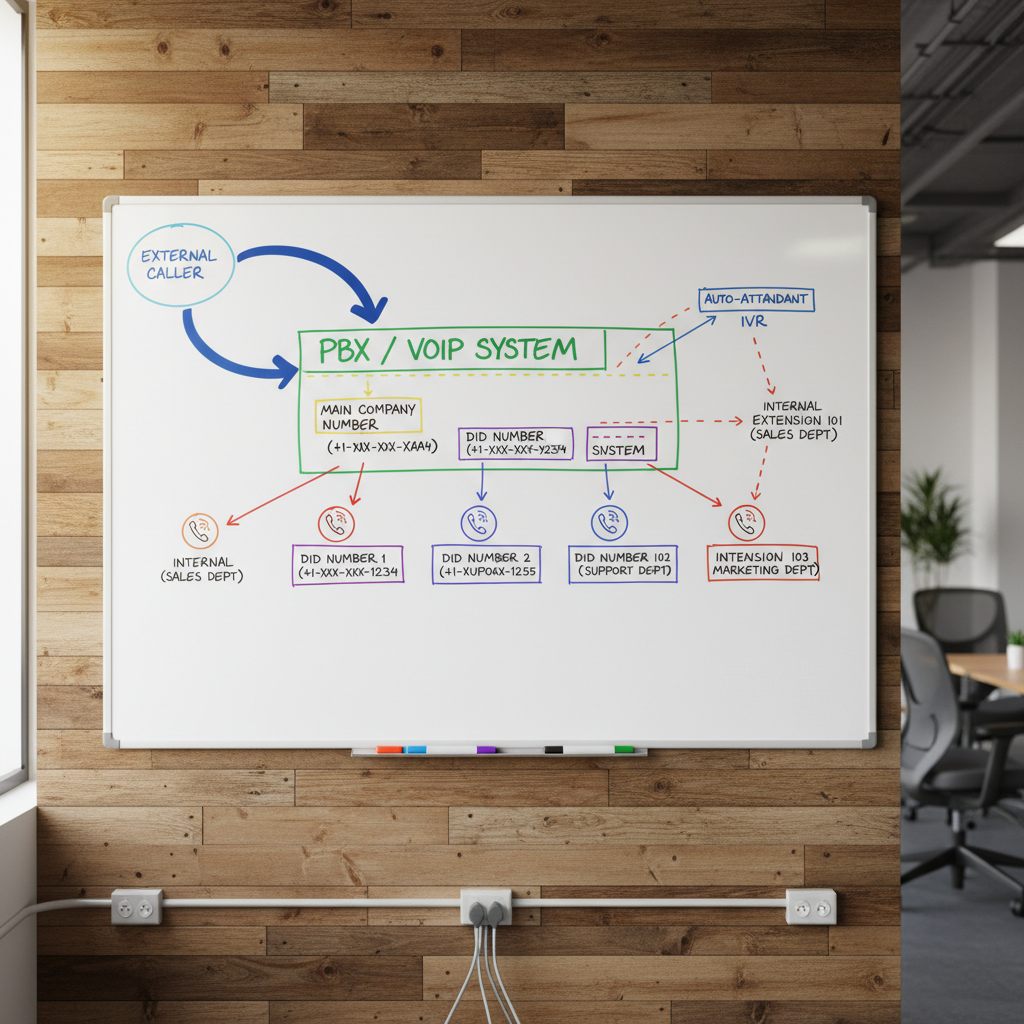
2. Mapping: Inside your PBX, you map each of these external DID numbers to a specific internal extension (e.g., DID number 555-1001 maps to extension 101, 555-1002 maps to extension 102).
3. Routing: When an outside caller dials one of your DID numbers, the call hits your PBX. The PBX instantly recognizes the number, checks its mapping rules, and routes the call directly to the assigned internal extension.
This entire process is seamless and instantaneous, eliminating the need for a receptionist or an auto-attendant to manually transfer the call.
DID vs. Traditional Phone Lines
The key difference is efficiency. With traditional phone lines (often called POTS lines), you would need a separate physical line and a unique phone number for every employee who needed one. This is expensive and difficult to scale. DID allows you to service hundreds or thousands of employees with a much smaller number of physical phone trunks (or a single internet connection with VoIP), as the PBX handles all the internal routing.
Key Benefits of Implementing Direct Inward Dialing
Adopting DID is not just a technical upgrade; it’s a strategic business decision that delivers tangible benefits.
- Enhanced Professionalism and Customer Experience: Giving clients, partners, and vendors a direct line to their point of contact is a significant professional courtesy. It reduces friction, speeds up communication, and shows that you value their time.
- Cost Efficiency: This is one of the most compelling advantages. DID eliminates the need for numerous individual phone lines. You purchase a block of numbers and channel them through your PBX, drastically reducing your monthly carrier costs and the hardware required.
- Scalability and Flexibility: As your business grows, so do your communication needs. With DID, adding a new employee is as simple as assigning them an unused number from your block within the PBX configuration. There’s no need to call the phone company to install a new line. This flexibility is crucial for dynamic organizations.
- Improved Call Routing and Productivity: By routing calls directly to the intended recipient, DID frees up your front-desk staff or receptionist to focus on more value-added tasks. It also reduces internal call transfers and ensures that employees receive the calls meant for them, improving overall workflow.
Applications of Direct Inward Dialing Across Industries
DID technology is versatile and benefits organizations of every size and type.
- Call Centers: DID is essential for routing incoming calls to specific agent groups based on the number dialed. For example, a company can have separate DID numbers for sales, technical support, and billing inquiries.
- Large Enterprises: For a company with hundreds or thousands of employees across multiple departments, DID is a non-negotiable. It provides a clear and organized communication structure, making a large organization feel more accessible.
- Small & Medium Businesses (SMBs): SMBs can use DID to project a more established and professional image. Even a five-person company can have unique numbers for sales, support, and each founder, creating the impression of a larger, well-organized operation. For those looking at modern phone solutions, exploring Grasshopper alternatives can reveal how virtual phone systems leverage DID technology.
- Remote Workforces: In the age of distributed teams, DID is critical. A DID number can be routed to an employee’s VoIP phone, softphone on their laptop, or even their mobile device, regardless of their physical location. This ensures seamless connectivity, a key component of mastering remote work.
- Fax Services: Many businesses still rely on faxing. A dedicated DID number can be assigned to a fax machine or an e-fax service, ensuring that incoming faxes are received reliably without tying up voice lines.
Setting Up Direct Inward Dialing: What You Need
Implementing DID is a straightforward process, but it requires coordinating a few key components. Understanding how to do direct inward dialing setup is essential for a smooth rollout.
- A PBX System: You need a Private Branch Exchange to manage the call routing. This can be a traditional on-premise PBX or, more commonly today, a cloud-based VoIP PBX. Modern VoIP systems offer greater flexibility and are often more cost-effective.
- A DID Provider: You must partner with a telecommunications carrier or a VoIP provider that offers DID services. They will sell you the block of numbers and connect the service to your PBX.
- Number Block: Your provider will help you acquire a range of DID numbers. You can choose new numbers or, in many cases, port your existing business numbers to the new service.
Configuration is typically handled within your PBX’s administrative interface. While specific steps vary by provider, the general process involves:
1. Assigning Numbers: In your system’s dashboard, you will see your list of available DID numbers.
2. Creating Routing Rules: You then map each DID number to a specific destination. This could be a user’s extension, a ring group (e.g., “Sales Team”), a call queue, or an auto-attendant.
3. Testing: Place test calls to the newly configured DID numbers from an external line to ensure they route correctly.
Potential integration challenges include number porting delays, which can take several days or weeks, and ensuring your PBX is compatible with the provider’s service. Always confirm compatibility and porting timelines with your chosen provider before committing.
Direct Inward Dialing vs. Direct Outward Dialing (DOD)
While they sound similar, DID and DOD serve opposite functions.
Direct Inward Dialing (DID): Concerns routing incoming calls from the public network to* an internal extension.
Direct Outward Dialing (DOD): Allows an internal user to make an outgoing* call to the public network directly, without needing an operator’s assistance to get an outside line.
Most modern business phone systems include both DID and DOD as standard features, providing a complete inbound and outbound communication solution.
Is Direct Inward Dialing Right for Your Business?
For the vast majority of businesses, the answer is yes. If your organization has more than a handful of employees and you want to improve customer access and operational efficiency, DID is an essential tool.
- For Small Businesses: DID provides a professional image and the flexibility to scale without significant new costs.
- For Large Enterprises: DID is the backbone of internal and external communication, making a complex organization navigable.
When evaluating the best direct inward dialing solution, consider whether a modern VoIP system or a traditional setup better fits your needs. The global VoIP market is expected to grow to over $102 billion by 2030, according to a report from Grand View Research, highlighting the industry’s shift toward more flexible, internet-based solutions. To explore your options, our Business Phone Service Guide offers a comprehensive comparison of top providers and features.
Conclusion: The Future of Direct Inward Dialing
Direct Inward Dialing is more than just a legacy feature; it remains a cornerstone of modern business communication. Its core function—direct, efficient routing—is as valuable today as it was decades ago.
As technology evolves, DID is becoming even more integrated into Unified Communications (UC) platforms, where phone numbers can route calls, video meetings, and messages seamlessly to the right person on any device. The principle of direct access is timeless, and DID will continue to be the technology that makes it possible.